Honing Your Golf Game at Home
- Staff Writer
- Nov 15, 2025
- 3 min read
While having Brian Bobbitt as your golf instructor is the best way to improve your golf game, you can make serious improvements to your game without ever leaving your backyard.
Here is Brian’s detailed plan broken down by space, equipment, drills, and structure. This is focused on realistic progression so you can improve steadily.
1. Assess and Set Up Your Space

Even a small backyard can be effective with the right setup.
Space Needed:
Swing area: At least 10–15 feet in diameter, free of obstacles.
Putting area: Can be small—3–6 feet wide with a target cup or marker.
Chipping area: A patch of grass or a mat.
Safety First:
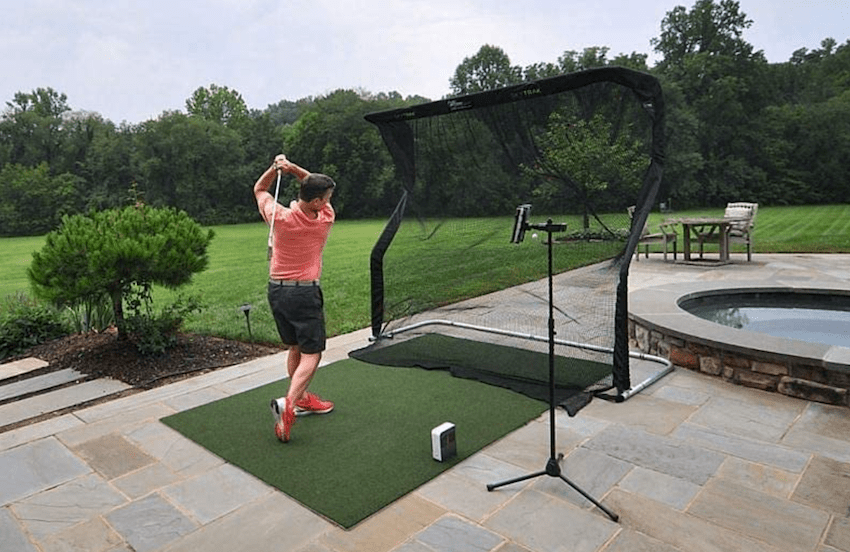
Use a net if you’re hitting full shots or irons.
Ensure nothing breakable is behind your hitting zone.
Consider soft practice balls for tighter spaces.
Optional Tools:
Hitting net
Chipping mat
Putting mat or artificial turf
Alignment sticks
Mirrors or phone camera for swing analysis
2. Swing Practice and Technique Drills
a. Short Game (Chipping & Pitching)
Target Practice: Place a bucket or mat target 5–20 feet away and chip balls into it.
Vary Lies: Practice from grass, rough, and slightly uneven ground to simulate real conditions.
Distance Control Drill: Chip balls to land at specific distances (e.g., 5 ft, 10 ft).
b. Full Swing
Mirror Work: Check posture, spine angle, and swing plane.
Slow Motion Swings: Focus on mechanics rather than distance.
Impact Drill: Use a tee or coin to practice hitting the exact spot consistently.
Alignment Drill: Use sticks or string to ensure proper aim.
c. Putting
Gate Drill: Use tees or coins to create a “gate” and putt through it for accuracy.
Distance Control Drill: Putt balls to stop at specific distances instead of sinking them.
Slope Practice: Use books or tiles to create small slopes and practice reading breaks.
3. Strength, Flexibility, and Fitness
Mobility Drills: Shoulder circles, torso rotations, and hip openers to improve swing range.
Core Workouts: Planks, Russian twists, and medicine ball rotations for stability and power.
Balance Drills: Stand on one leg while swinging a club or with eyes closed.
4. Mental & Visualization Practice
Visualize shots you’d hit on the course.
Practice pre-shot routines.
Record your swings and compare them to pros for mental cues.
5. Structured Practice Schedule

Example Weekly Plan:
Day | Focus Area | Time |
Mon | Putting drills | 20–30 min |
Tue | Chipping & short game | 30–40 min |
Wed | Swing mechanics | 30 min |
Thu | Fitness & mobility | 20–30 min |
Fri | Combined practice | 45 min |
Sat | Simulated course play (backyard targets) | 30–60 min |
Sun | Rest / Mental visualization | 15 min |
6. Progress Tracking
Keep a practice journal: note drills, successes, and areas to improve.
Record putting accuracy (e.g., % of putts made).
Track consistency of swing mechanics with video feedback.
7. Optional Tech Tools
Swing analyzer app: Provides instant feedback on angles, speed, and tempo.
Launch monitor or radar (if space allows): Track distance and spin even in a net.
Key Principles
Consistency over intensity: 10–15 focused minutes daily beats a 2-hour distracted session.
Focus on short game: Up to 70% of strokes are inside 100 yards.
Use your space creatively: Even small yards can simulate real course situations.
Feedback is essential: Record swings, analyze results, and adjust drills.
So during your next session with Brian, make sure to share photos of your backyard set up.



Comments